
Plan Boat Launching and Storage Access
A boat that fits the water may still be difficult to deploy from the site. Check the complete path from storage to launch before deciding on size or floor type.
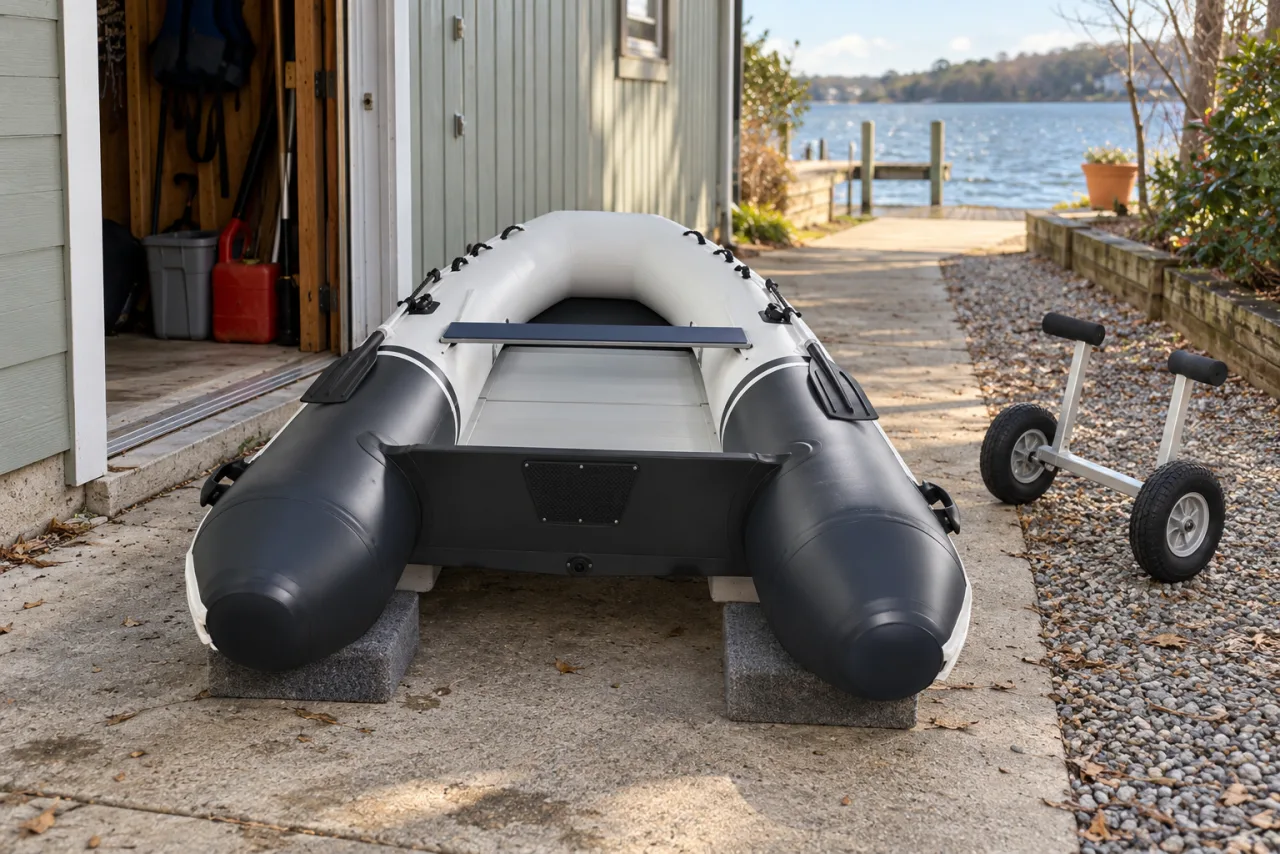
Survey the actual route
Measure doors, gates, stairs and the narrowest turn. Note ground slope, rough surfaces and distance to water. Record seasonal restrictions such as changing water level or access closures so the purchase brief reflects the launch you can actually use.
Define the handling team
List who moves the hull, floor, motor and gear. Ask for separate component weights and approved handling points. A fitted boat can differ substantially from an empty hull, and an ordinary grab handle may not be approved as a lifting point.
Specify support equipment
Discuss a compatible trolley, trailer or lifting arrangement with the manufacturer and a qualified installer where relevant. Confirm dimensions, attachment method and responsibilities. Do not assume generic wheels or straps suit every hull shape or loaded configuration.
Plan the return route
Reserve a place to rinse, inspect and dry the boat before storage. Check whether wet equipment can pass safely through the same access path. Request an assembly and packing demonstration that includes the intended operators and site constraints.
Procurement checklist
- Measure the complete storage-to-water route.
- Match handling tasks to component weights.
- Provide space for rinsing and drying.
Frequently asked questions
Can carrying handles be used for hoisting?
Only use lifting points and methods expressly approved for the exact model and load.
Should I choose size before transport equipment?
Review both together; transport and access can determine which configurations are practical.