
How to Plan a Boat Sample Comparison
A sample comparison is useful when candidates answer the same brief. Prepare observations in advance so attractive finishes do not distract from fit, package completeness and practical handling.
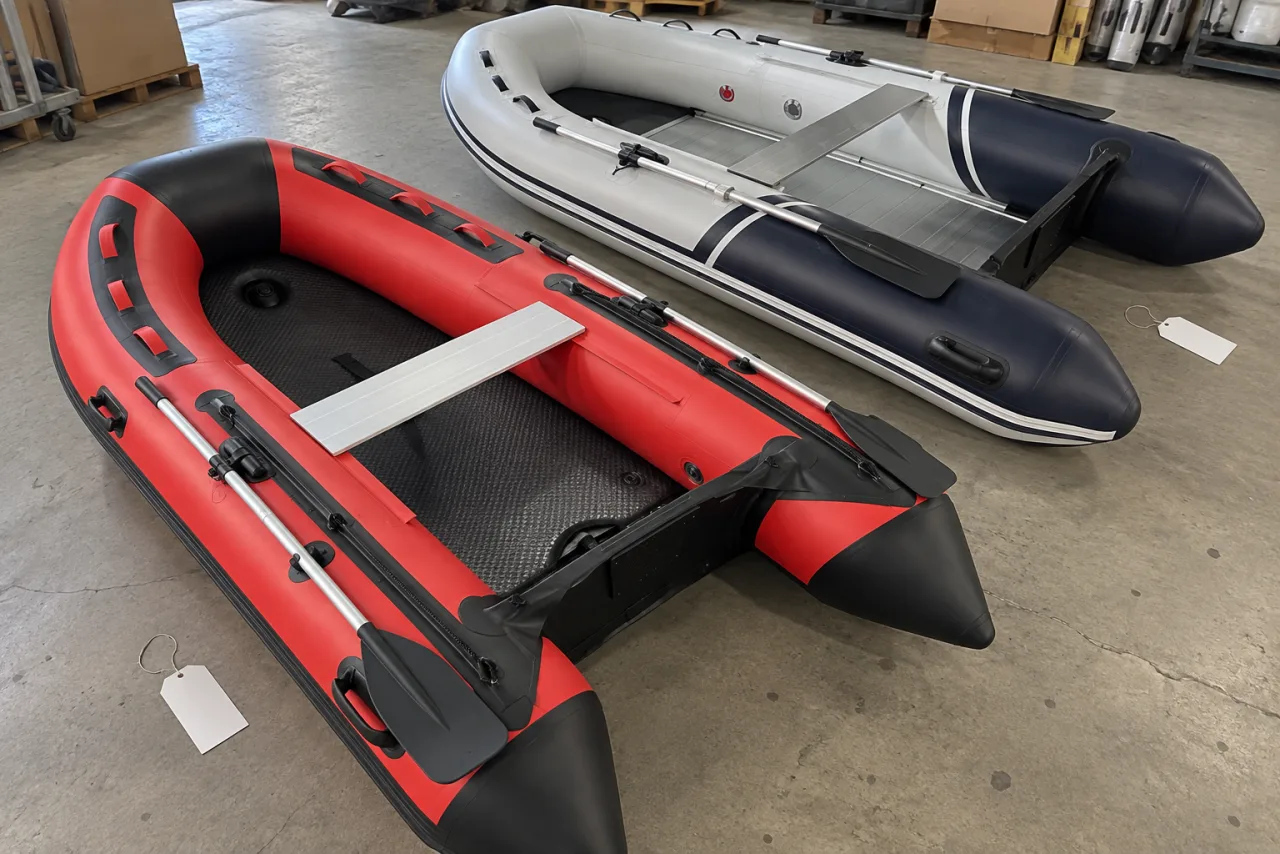
Fix the comparison configuration
Record the model, floor, seats, propulsion and accessory list for each candidate. Request current manuals and model identification before the session. If the samples differ from the quoted production configuration, note those differences explicitly.
Begin with a stationary review
Count parts, inspect visible condition and measure the occupied floor layout. Observe assembly, access to valves and storage, and the way components pack. Photograph observations against the agreed specification without presenting a visual review as a structural test.
Control any on-water review
Use competent operators, suitable safety arrangements and conditions within manufacturer guidance. Keep the proposed load and route comparable. Record conditions and operator comments; stop if equipment or conditions are unsuitable rather than forcing a comparison.
Close with an issue register
Separate measured facts, personal preferences and unanswered questions. Give each discrepancy an owner and required response. Ask for written changes to the final configuration instead of assuming a verbal promise at the sample session becomes part of the order.
Procurement checklist
- Record exact sample configurations.
- Use the same observation checklist.
- Resolve discrepancies in the written order.
Frequently asked questions
Does a successful sample session certify production boats?
No. It informs selection; production conformity and any required certification need separate evidence.
Must every sample be taken on water?
No. Start with stationary checks, then arrange only assessments that can be conducted competently and appropriately.