
Planning a Family Inflatable Boat Layout
A family layout should make boarding, seating and access to essential equipment understandable. A maximum person count is a limit to check, not a seating plan for every family outing.
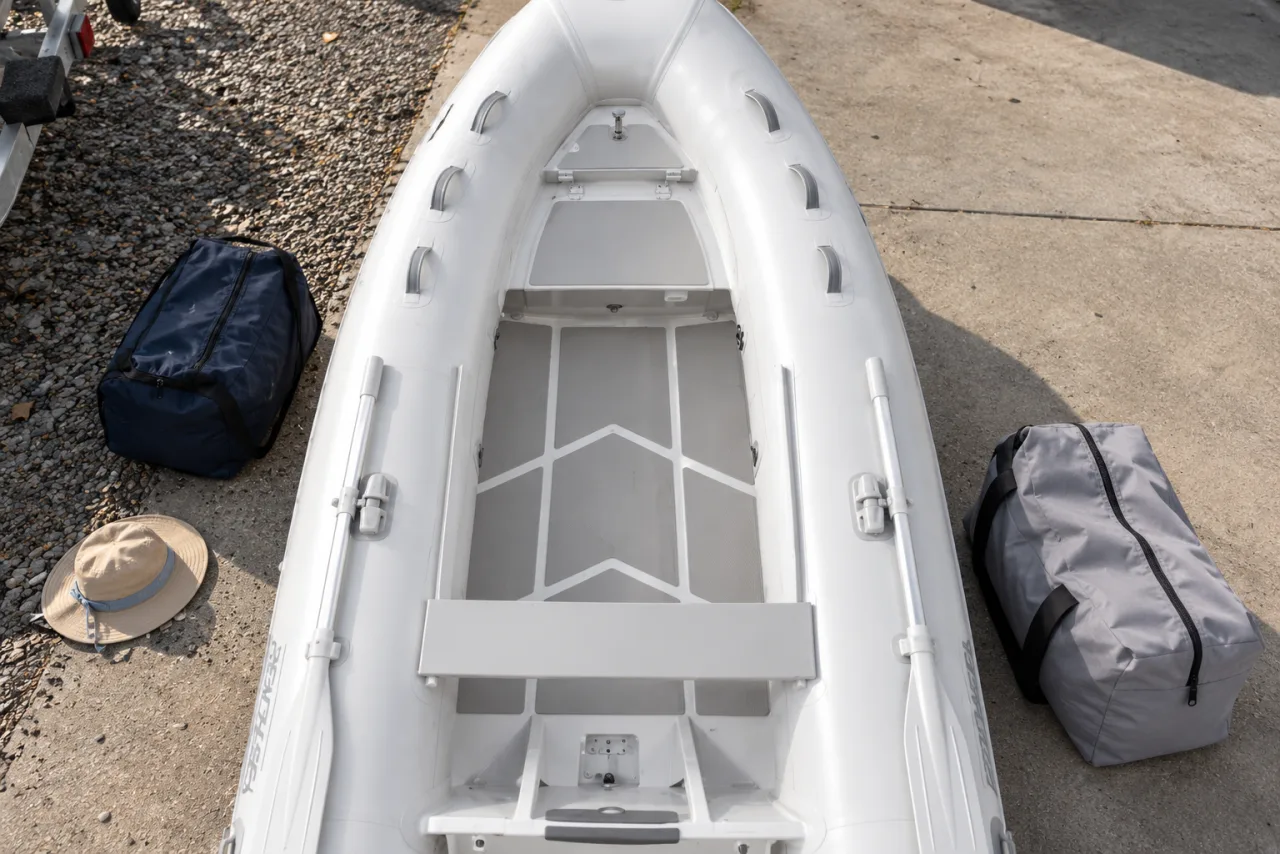
Draw the actual group
Mark an assigned seat for each person and include the operator. Note mobility needs and the equipment carried together. Request internal dimensions with the proposed seats installed; counting spaces on the tubes is not a substitute for approved seating guidance.
Keep movement simple
Identify a clear boarding point and a short route to each seat. Secure bags where they will not become steps or block access. Ask for approved handholds and any boarding accessories rather than improvising handles on fabric or loose equipment.
Reserve accessible safety space
Include correctly fitted personal flotation equipment, communications and other required equipment in the layout and mass calculation. Ask a qualified instructor about family procedures and local requirements. Children and inexperienced passengers need suitable supervision, not just an available seat.
Review the loaded sample
Use a stationary demonstration to check reach, legroom and storage access before any controlled on-water assessment. Confirm the exact model limits and load distribution instructions. Rework the arrangement if ordinary tasks require passengers to climb over equipment.
Procurement checklist
- Assign seats on a scaled drawing.
- Keep boarding and safety access clear.
- Include every person and carried item in the load brief.
Frequently asked questions
Can the published person count define my family layout?
It is only one limit; space, mass, distribution and individual needs must also fit.
Should bags be left loose for easy access?
Plan secured storage that remains accessible without obstructing boarding or controls.