
Flood Preparedness Supplies: Household Reserves and Coordinated Procurement
Prepare useful supplies before disruption, then keep them accessible and replaceable. Base the order on local warnings and household needs rather than treating a future El Niño, flood season or price rise as certain.
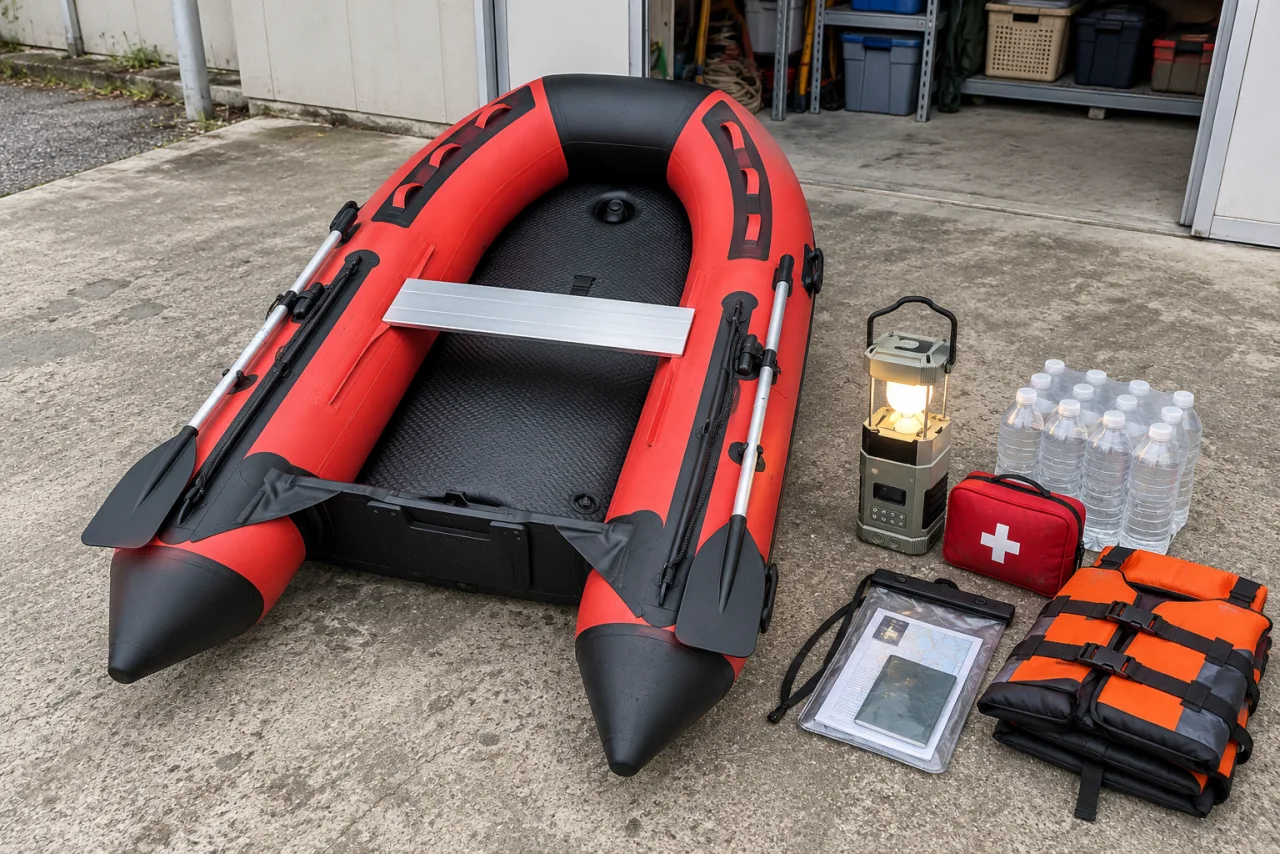
1. Build a household baseline before buying specialist equipment
Count people and planning days, including infants, pets and anyone needing assistance. Start with at least three days of familiar shelf-stable food that needs little water and no refrigeration. Include a manual can opener where needed, hygiene supplies, lighting and essential document copies. A household kit supports continuity; rescue boats and technical equipment belong in a separately managed, trained-team plan.
2. Calculate water in litres, not cases
China’s Ministry of Emergency Management basic checklist states a minimum of 3 litres per person to cover three days of basic drinking needs. It does not say 3 litres per person per day. If a household chooses a separate drinking-water target of 3 litres daily, four people for three days need 36 litres: three cases containing 24 bottles of 500 mL each.
Allow separately for cooking, hygiene, pets and additional individual needs. U.S. CDC preparedness guidance uses one US gallon, approximately 3.8 litres, per person per day as a broader starting point. These are different planning scopes, not interchangeable universal standards.
3. Treat filters as products with defined limits
Prioritize bottled water and supplies explicitly cleared by local authorities. Ask which contaminants a filter or treatment product addresses, the evidence for those claims, consumable needs and operating instructions. Some household systems require mains power or water pressure. Do not drink floodwater or unknown-source water. Ordinary portable filters do not provide universal protection from viruses or dissolved chemicals; CDC warns that boiling or disinfecting fuel- or toxic-chemical-contaminated water cannot make it safe.
4. Match flood protection to the building
Measure doors and other openings before requesting barriers. Distinguish empty sandbags, filled bags and water-activated products; ask about filling, deployment, water conditions, storage and disposal. Keep drains and evacuation routes clear where safe to do so. Move documents into suitable sealed storage and keep protected copies. Drying equipment does not replace flood protection; have wet electrical equipment assessed appropriately before using or charging it.
5. Plan lighting and communications for an outage
Choose battery lights, spare batteries, a radio where appropriate, compatible charging leads and paper contacts. Compare power banks using energy, voltage, output ports and manufacturer instructions; a 20,000 mAh label does not guarantee a particular number of phone charges. Hand-crank and solar functions have practical limits. Keep a whistle and emergency blanket where needed, and prefer battery lighting to open flames.
6. Arrange cooling and assistance during heat
Identify a cooler location and accessible transport before an outage. Prepare drinking water and shade, and arrange check-ins for older people, children and people with health conditions. Cooling patches, oils and medicines cannot substitute for effective cooling or necessary medical care. Ask a clinician about individual fluid or medicine restrictions. Follow current local heat guidance and seek urgent help for severe symptoms rather than relying on a shopping-list remedy.
7. Review first aid, hygiene and personal medicines
Have a qualified reviewer select gloves, dressings, gauze and other appropriate first-aid consumables. Check labels, packaging and expiry. Add suitable insect protection and cleaning supplies, following product age and use restrictions. Do not buy antibiotics or antidiarrheal medicines as automatic preventive treatment. Discuss any emergency prescription reserve, refill permissions, temperature-sensitive storage and medical-device power needs with a doctor or pharmacist; a fixed 15–30 day supply is not suitable or permitted for everyone.
8. Rotate stock and keep payment alternatives
Buy familiar consumables in manageable quantities, use earlier-expiring stock first and replenish the agreed reserve. Record battery condition, seals and replacement responsibilities. Keep modest small-denomination cash and paper contacts for payment or network disruption. Maintain household equipment according to its instructions and seek professional assessment after water damage. Preparedness should reduce disruption and waste, without using unsupported inflation predictions to encourage hoarding.
9. Coordinate community supplies and boat packages
RaftInflatable can coordinate enquiries for emergency kits, sandbags and barriers, waterproof storage, water containers and treatment tools, lighting, backup power, first-aid consumables, life jackets and inflatable rescue-boat packages. Food, drinking water, medicines and medical devices require separate availability, shelf-life, destination and transport review. Supply sourcing and boat manufacturing should be confirmed separately.
For boats, review the exact hull, floor, paddles, pump, repair kit, propulsion and personal equipment together. Request model-specific limits, manuals and relevant documents. A rescue product name or capacity rating does not authorize an operation: trained, authorized teams must assess conditions and use suitable life jackets. Send quantities, budget, destination, required date and documents for an itemized written quotation; exact products, compliance scope and delivery terms remain subject to confirmation.
Procurement checklist
- Calculate people, days and actual litres; check personal needs.
- Measure protection openings and specify usable lighting and charging equipment.
- Review medicines with a professional and assign stock rotation.
- Separate household supplies from authorized-team boat equipment.
- Submit quantities, budget, destination, documents and required arrival date.
Frequently asked questions
Can RaftInflatable coordinate supplies as well as boats?
Yes. Send the combined requirements for sourcing review. Exact availability, selected suppliers, documents, packaging and delivery responsibilities must be confirmed in the written quotation.
Can a filter replace stored water, or a boat replace an evacuation plan?
No. Water treatment has contaminant-specific limits, and boat operations require trained authorized people and suitable conditions. Follow official water and evacuation guidance.
Sources & further reading
- China Ministry of Emergency Management: basic household supply checklist
- China CDC: household drinking-water and hygiene during floods
- CDC: emergency water safety and treatment limitations
- CDC: water storage planning
- China CDC: public health protection during heatwaves
- CDC: prescription preparedness
- FEMA: power outage preparedness
- NSW Rural Fire Service: trained flood-rescue roles