
How to Size an Inflatable Tender
Tender size affects boarding, transfers and storage as well as passenger space. Start with the route between the mother vessel, shore and the place where the tender will be stored.
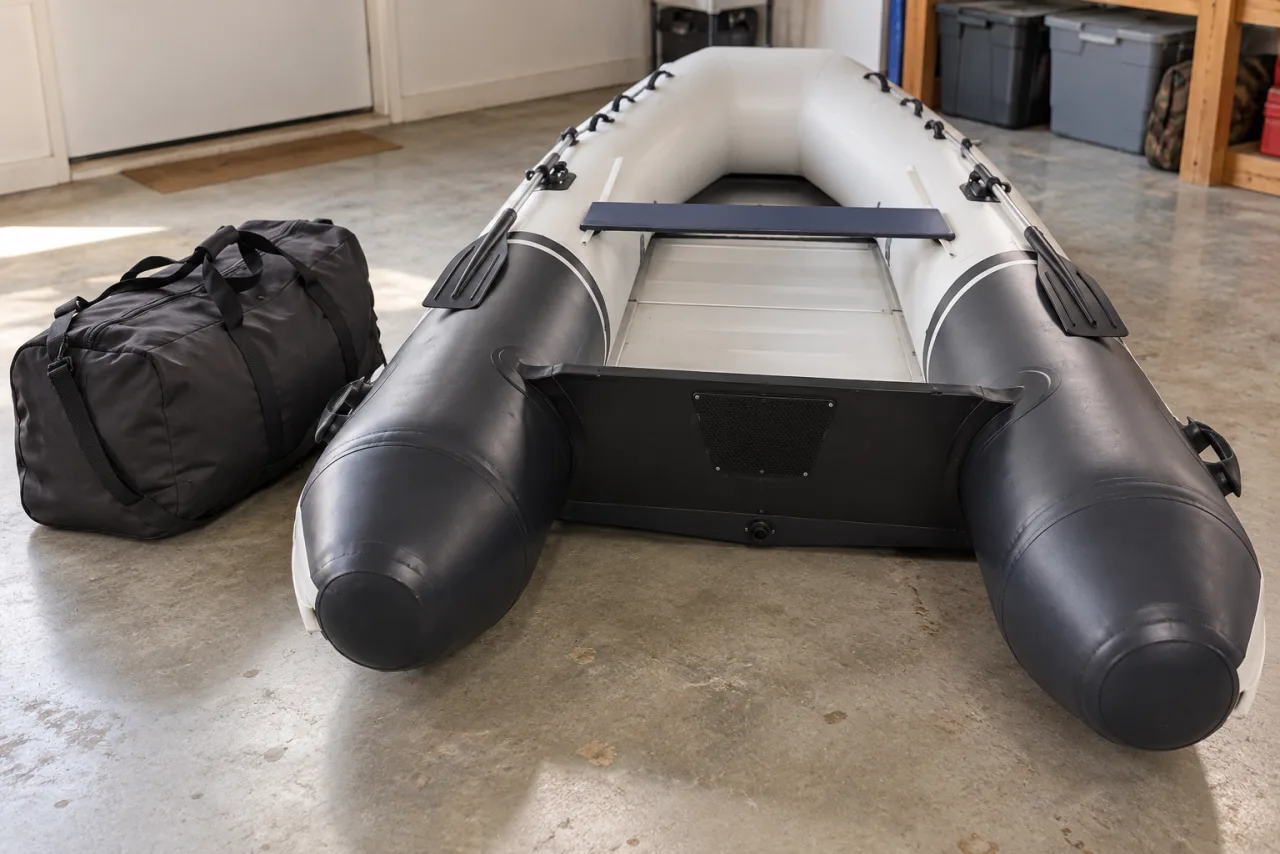
Measure the people and equipment
Write the usual passenger group and the bags, provisions or tools carried together. Include the operator and propulsion system. Ask for internal measurements with the selected seats installed so the load plan can be checked against the available floor area.
Review boarding access
Mark the intended boarding side and where each person sits after entering. Consider how a less mobile passenger reaches the seat without stepping over loose gear. Request manufacturer guidance for access equipment and approved handholds rather than adding unverified fittings.
Check stowage constraints
Measure storage openings, deck space or davit arrangements before fixing the hull length. A folding hull still leaves floor pieces, oars and possibly a separate motor. Any lifting system needs documented compatibility and an appropriate assessment for the complete load.
Write a comparable tender RFQ
Send the supplier the storage envelope, launch method, passenger brief and destination. Request the exact floor option, packed component weights and accessory inventory. Ask for the smallest workable configuration and a larger alternative so space and handling compromises are visible.
Procurement checklist
- Measure the occupied interior.
- Document boarding and lifting constraints.
- Request separate packed dimensions for all components.
Frequently asked questions
Can I size a tender only by person rating?
No. Check mass limits, usable space, boarding and the proposed load distribution as well.
Will a folding tender fit in a small locker?
Only measurements of the actual packed hull and rigid pieces can answer that question.