
Choosing Inflatable Boats for a Rental Fleet
A rental fleet purchase includes repeated handovers and maintenance work. Select boats that staff can inspect, configure and store consistently during the actual operating day.
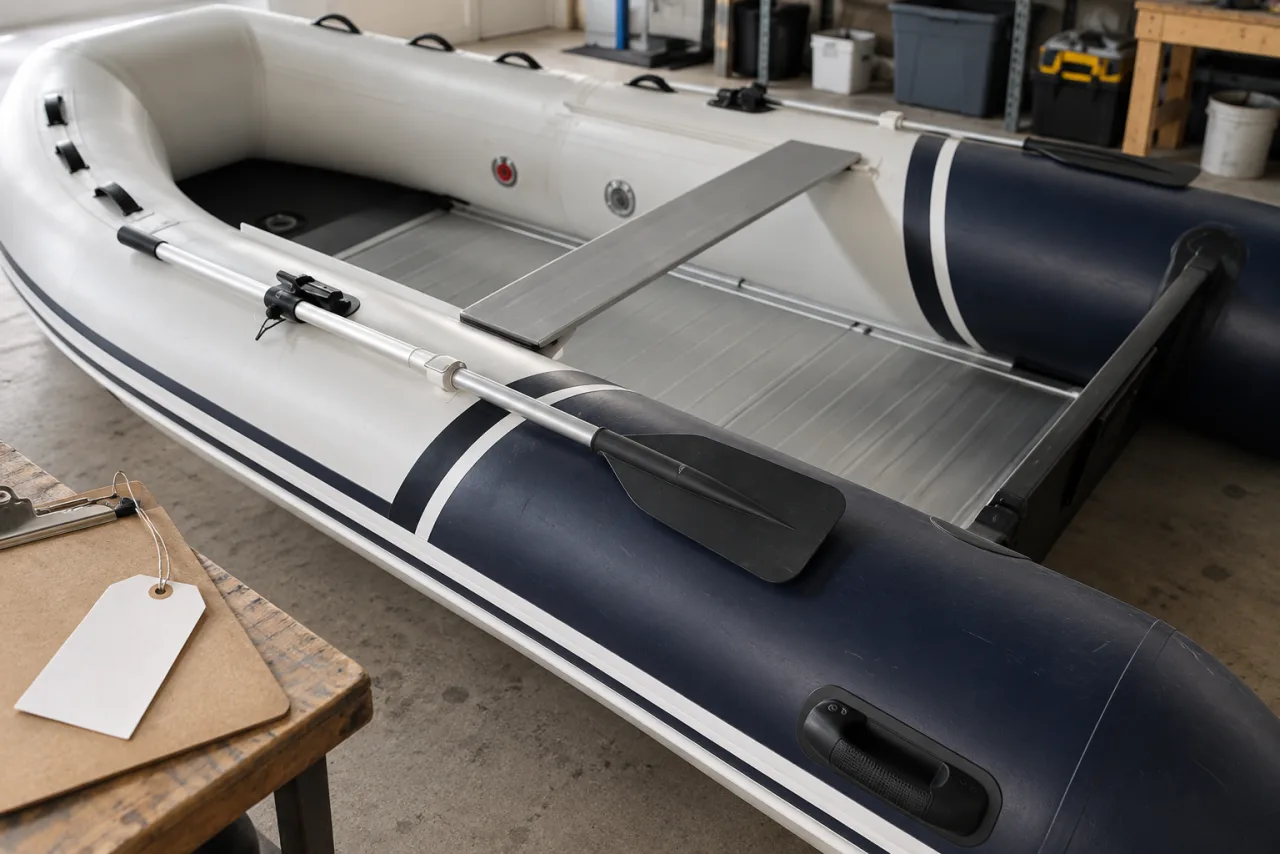
Define the rental session
Record typical users, instruction time, launch conditions and turnaround between bookings. List the configuration handed to every customer. Avoid mixing different seating, pumps or accessory systems unless staff can reliably identify and explain them.
Evaluate inspection access
Ask to inspect valves, seams, floors and attachment points on a sample. Check whether staff can see common contact areas without removing the entire fit-out. Establish model-specific acceptance and withdrawal criteria with the manufacturer before putting units into service.
Plan spares and records
Request exact valve, seat, fin and floor identifiers where relevant. Ask which parts remain available and how revisions are documented. Assign each craft an asset number so inspection notes and repairs follow the individual unit rather than a generic fleet description.
Count turnaround effort
Observe assembly, accessory checks, cleaning, drying and storage using the proposed staff and launch setup. Compare package weights and bag sizes. A lower initial quote may be less useful if it creates incompatible spare inventories or an unrealistic cleaning workload.
Procurement checklist
- Define one standard rental configuration.
- Create asset-specific inspection records.
- Obtain a model-matched spare-parts list.
Frequently asked questions
Should every boat in a fleet be identical?
Standardization can simplify training and spares, but distinct user groups may justify separately controlled configurations.
Does a sample replace routine inspections?
No. Agree checks and records for every handover and after reported damage or unusual events.