
RIB or Foldable Inflatable: A Practical Comparison
A RIB has a rigid hull; a folding inflatable is designed around a different storage routine. Choose by the whole ownership process rather than assuming one format is universally better.
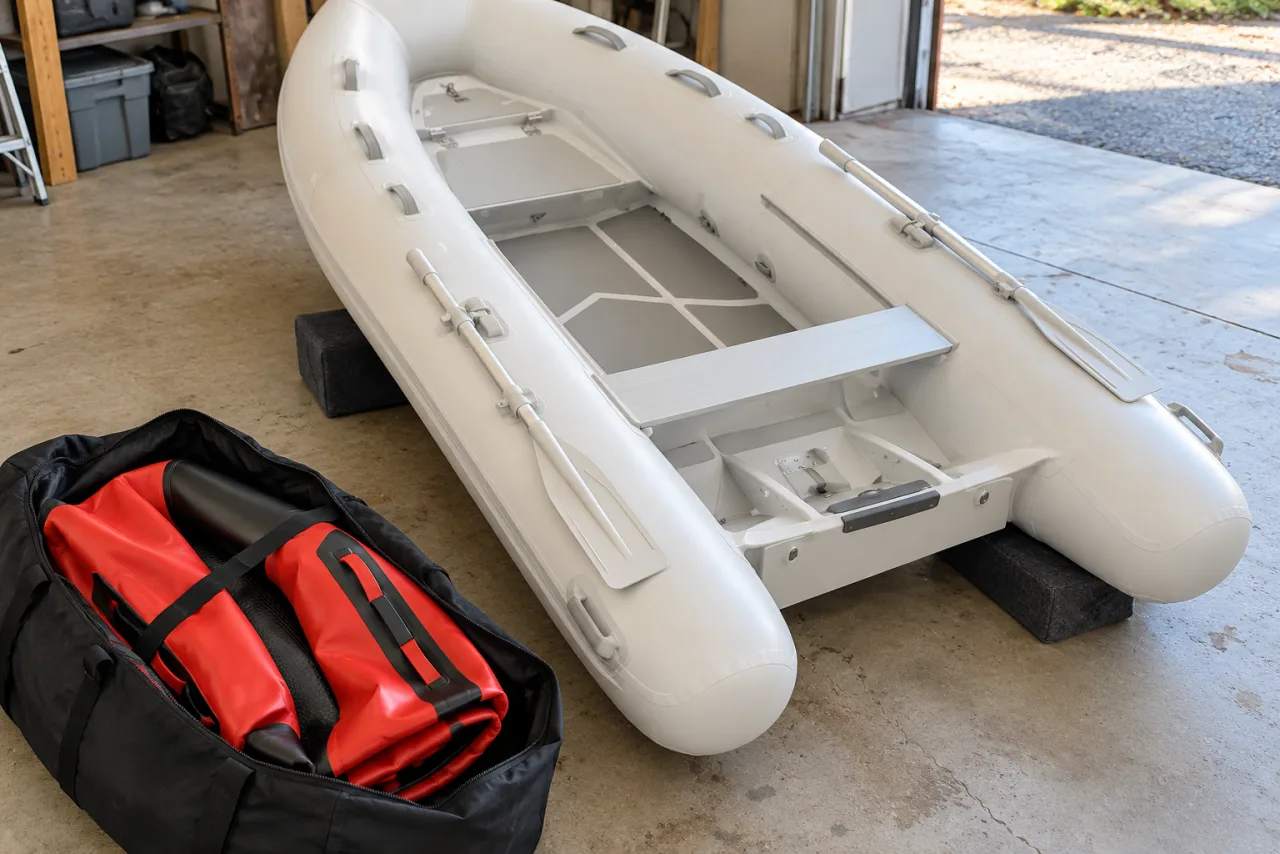
Start at the storage location
Measure available space and decide whether the craft stays assembled, travels on a trailer or is packed after each outing. A RIB still needs space for its rigid hull. A folding inflatable may divide into several bags and rigid floor pieces.
Compare launching requirements
List the people, ramp, trolley or lifting equipment involved. Request complete ready-to-launch mass information, including fitted equipment. Handling a bare hull in a catalog is different from moving the configuration that will actually reach the water.
Review the proposed fit-out
Ask each supplier for a drawing showing seating, propulsion, storage and permitted attachments. Compare equivalent operating briefs and documented model limits. Hull format alone does not establish acceptable conditions or guarantee ride quality for your particular load.
Price the complete system
Include transport equipment, floor components, covers, pump and routine storage needs as applicable. Request packed and assembled dimensions. If both formats remain viable, review samples using the same passenger and equipment plan before deciding.
Procurement checklist
- Measure storage before selecting the format.
- Write a practical launch plan.
- Compare complete fitted packages.
Frequently asked questions
Can a RIB be packed like a soft-floor boat?
The rigid hull retains its dimensions unless the exact design includes a documented folding system.
Which format handles better?
That requires model-specific evidence and comparable conditions; the format name alone is insufficient.