
Plan Emergency Lighting and Backup Power
An outage kit should support clear tasks: seeing an exit, reading instructions and keeping essential communications available. Large capacity numbers alone do not describe a working plan.
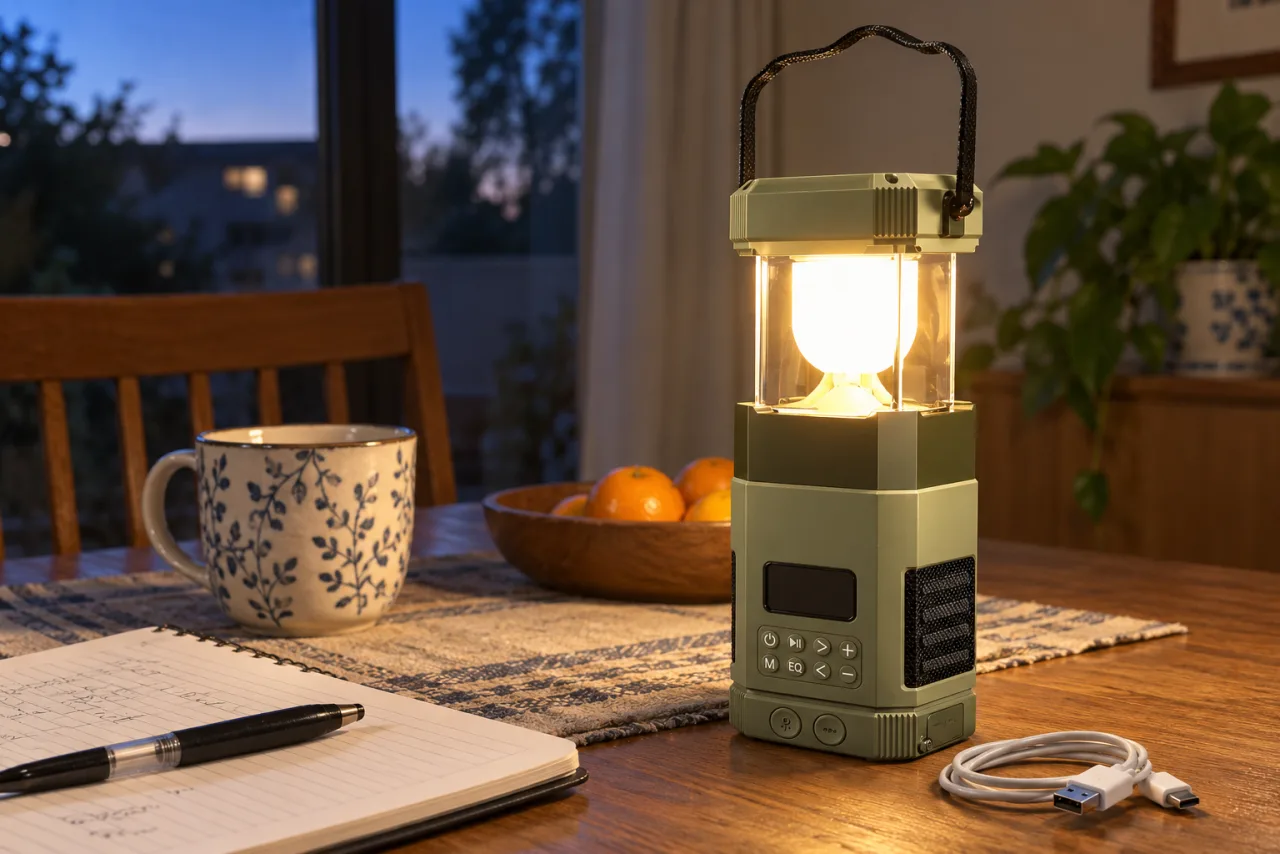
Assign a light to each task
Separate room lighting, personal movement and hands-free work. Compare switches, beam pattern, low-output modes and battery access. Place lights where users can find them in darkness and ensure the intended household members can operate the controls.
Compare energy and connections
Request battery energy in watt-hours alongside the listed voltage and capacity. Check supported output ports, cable types and the device charging requirements. The same milliamp-hour number can describe different stored energy at different voltages and does not guarantee a number of phone charges.
Read runtime conditions
Ask which brightness setting and battery were used for a lighting runtime claim. Include spare batteries or an approved charging method where appropriate. Follow the manufacturer storage and charging instructions; do not plan around unverified all-night performance at maximum output.
Separate household and medical needs
FEMA recommends planning alternative power and using battery-powered lighting. A medical device needs its own provider-approved outage plan. If a generator is considered, obtain current official placement and operation guidance; a consumer power bank is not a substitute for that equipment assessment.
Procurement checklist
- List lighting tasks and essential devices.
- Confirm watt-hours, ports and matched cables.
- Record charging, storage and replacement instructions.
Frequently asked questions
Does a 20,000 mAh label tell me the usable output?
No. Voltage, conversion losses, ports and the device load also affect what is available.
Can one lantern serve every location?
Only if the household can safely access it; separate lights often make retrieval and movement easier.