
Plan Emergency Water Storage by People and Days
Water cases are packaging units, not a preparedness calculation. Start with the number of people, the planning period and the litres actually contained in each package.
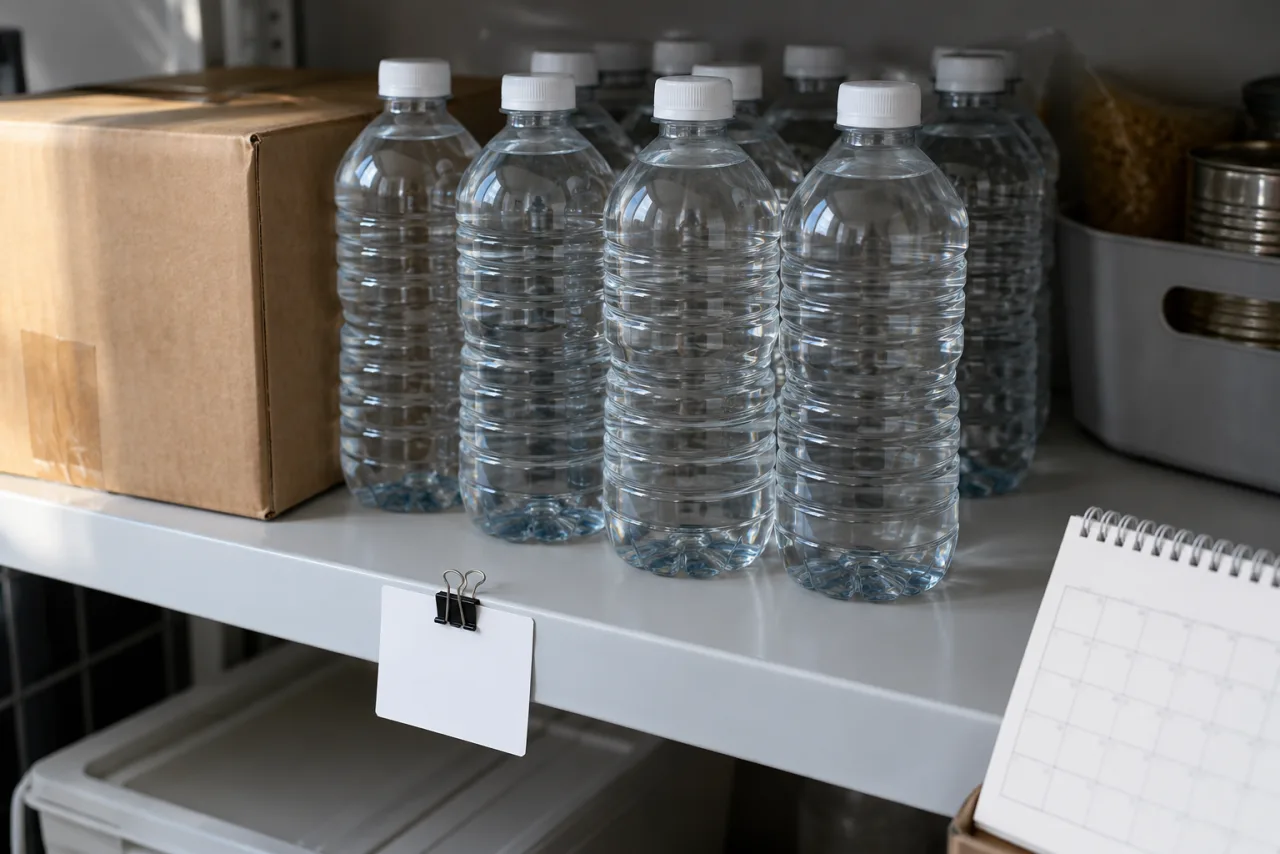
Set a clear planning baseline
CDC guidance recommends at least one US gallon, approximately 3.8 litres, per person per day for three days, with a longer supply if possible. This covers drinking and other basic needs; heat, pregnancy, illness or pets can require additional planning.
Convert volume into an order
Multiply people, daily volume and days, then divide by the labelled package volume. A four-person, three-day baseline is approximately 45.6 litres. Round up to whole packs and record bottle sizes so a supplier cannot change the volume through a packaging substitution.
Choose manageable storage
Ask for sealed drinking-water packages or containers intended for water storage. Distribute manageable units where household members can reach them. Check the manufacturer storage directions and keep the stock away from chemicals and conditions that could damage packaging.
Plan rotation and an alternate source
Record dates and inspect containers routinely. Use a first-in, first-out approach consistent with the product instructions. Write down the local safe-water distribution contact. A portable filter is an additional tool with specific limits, not a guarantee that floodwater becomes suitable.
Procurement checklist
- Calculate litres from people and days.
- Confirm package volume and storage suitability.
- Record rotation dates and an alternate safe source.
Frequently asked questions
Are two or three cases enough for every family?
No. Case volume and household needs vary; calculate the total litres first.
Does stored water remove the need for official advisories?
No. Follow the local authority instructions for the current incident and water source.