
Rotate Emergency Kits Without Waste
A kit is only useful if its contents remain identifiable, accessible and serviceable. A modest rotation routine is more reliable than buying a large bundle and forgetting it.
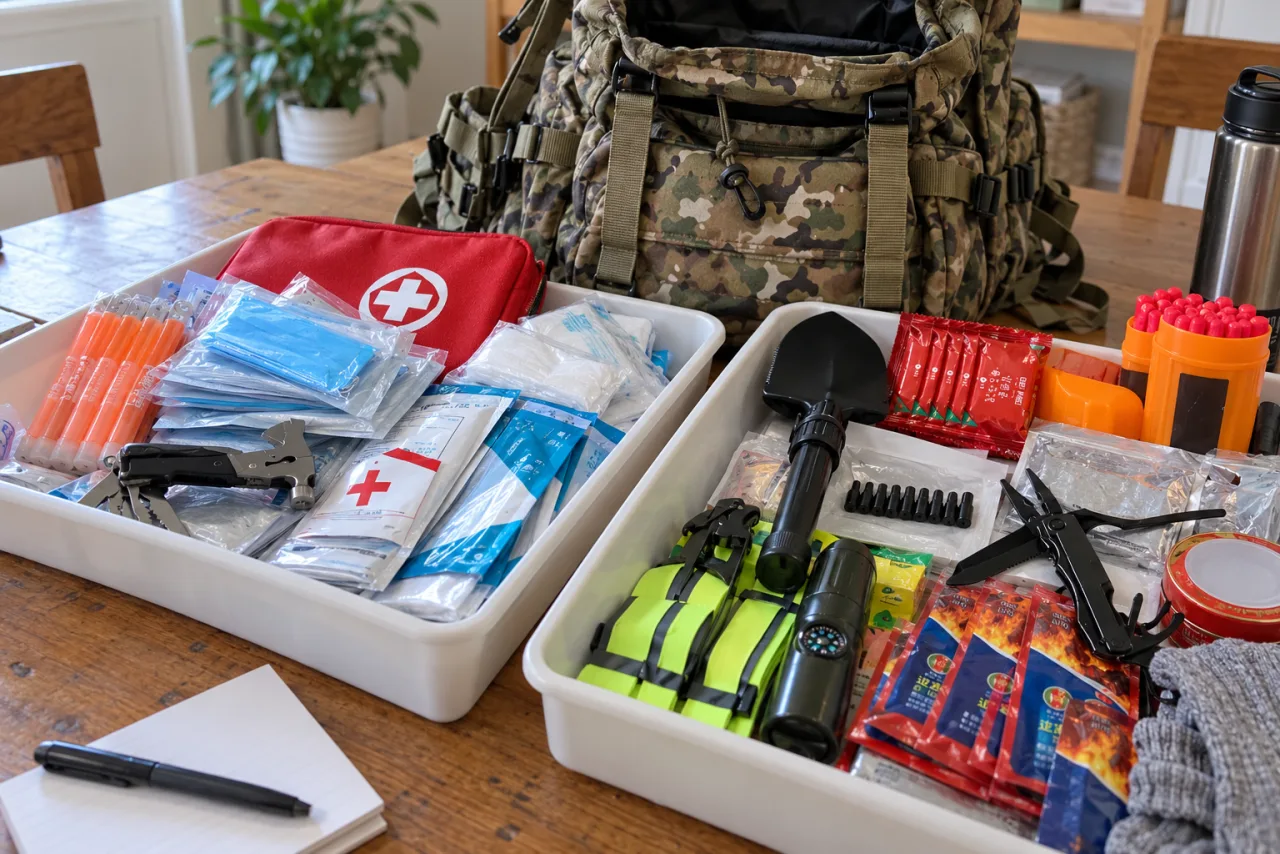
Record different replacement triggers
Separate labelled expiry dates, manufacturer service intervals and condition-based replacement. Water packaging, first-aid consumables and batteries should not share one invented shelf life. Keep product instructions with the inventory so checks follow the actual item requirements.
Use stock in a sensible order
Place earlier-expiring everyday consumables where they can enter normal household use before replacement. Keep emergency reserve quantities visible in the record. Do not rotate damaged, contaminated or otherwise unsuitable items into household use merely to avoid waste.
Inspect packaging and access
Check seals, leakage, corrosion and storage conditions without opening sterile packs unnecessarily. Confirm that torch batteries, charging cables and pouch closures remain usable. Review whether the kit can still be reached if a storage room becomes inaccessible.
Assign a review owner
Choose a named person and recurring calendar review, plus an additional check after items are used or moved. Record what was replaced and what remains outstanding. For medicines, consult the pharmacist about storage and replacement instead of extending a labelled expiry through guesswork.
Procurement checklist
- Log dates and product-specific replacement triggers.
- Keep reserve quantities separate from ordinary use.
- Assign a custodian and record every replenishment.
Frequently asked questions
Should everything be replaced on the same day?
No. Follow each product’s dates, condition and instructions while using one coordinated inventory review.
Can medicine expiry be extended to reduce waste?
Do not assume so. Ask a pharmacist about appropriate replacement and disposal.