
Dry and Store an Inflatable Boat
Storage planning starts before the last trip ends. Provide enough space and time to inspect and dry the boat rather than treating the carry bag as a permanent drying solution.
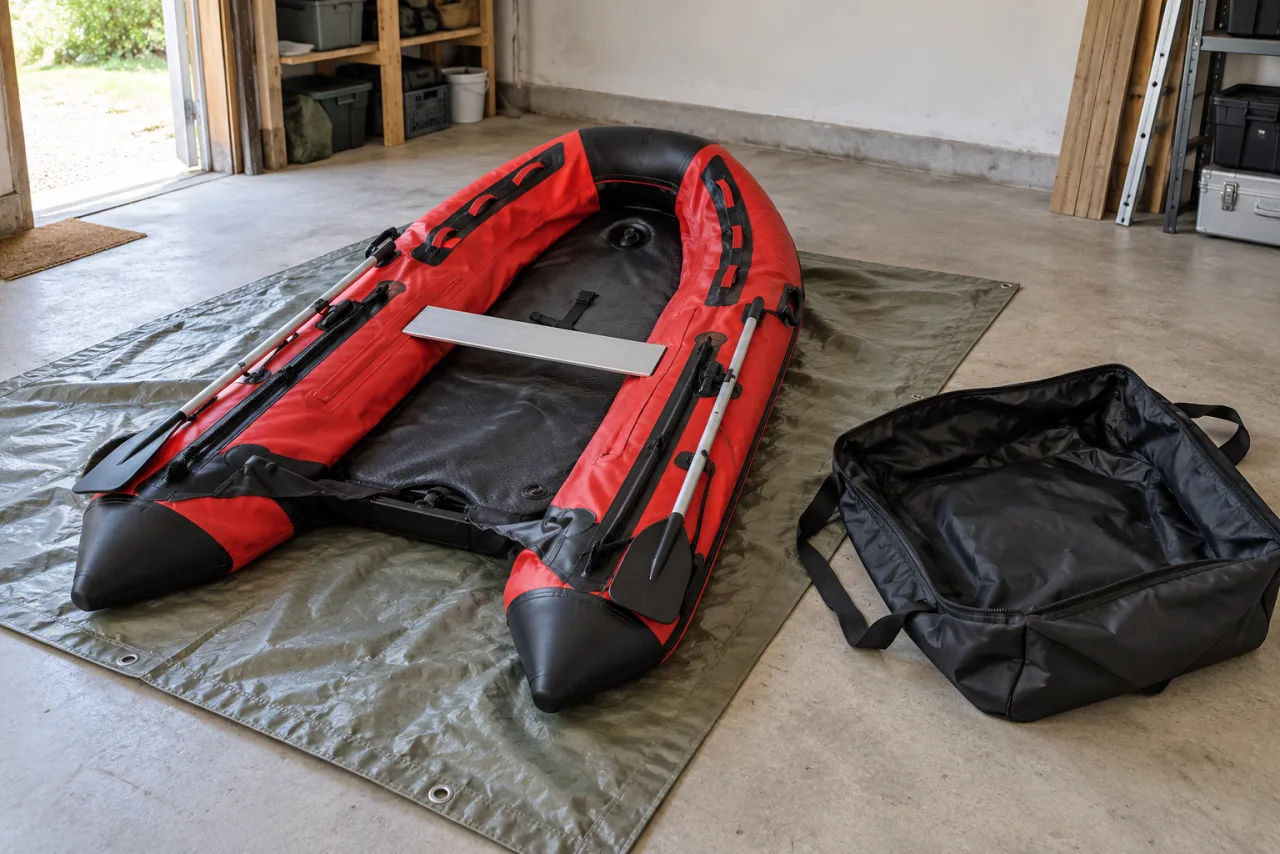
Separate the components
Follow the manual for removing floor pieces, seats and detachable fittings. Identify the surfaces hidden underneath them. Keep small connectors together and record damage while the parts are visible, before moisture and debris are enclosed in the package.
Check for trapped moisture
Dry accessible folds and interfaces as instructed. Moisture suspected inside a chamber requires the manufacturer procedure, which may differ by construction. Avoid using uncontrolled heat or dismantling valves simply to speed up storage.
Choose a suitable storage space
Follow the specified temperature, ventilation and packing guidance. Protect the package from sharp objects, chemicals and avoidable compression. Measure space for rigid components as well as the hull bag so floor edges cannot press against fabric during storage.
Record the stored condition
Label bags with model and inventory, and note whether any issue still needs service. Plan the next inspection before reuse. If a boat must be packed temporarily while wet, arrange a prompt unpacking and drying step rather than forgetting the return condition.
Procurement checklist
- Expose hidden interfaces for drying.
- Keep rigid edges away from folded fabric.
- Label unresolved issues before storage.
Frequently asked questions
Can a wet boat stay in its bag until next season?
Plan prompt drying according to the manual; a closed bag does not resolve trapped moisture.
Is tighter packing always better?
Use the specified packing method. Excessive compression can concentrate stress around fittings and folds.