
What Seam Evidence Should a Supplier Provide
Seam quality cannot be established from a construction buzzword. Ask how the selected joints are made and what evidence connects that process to the boat being purchased.
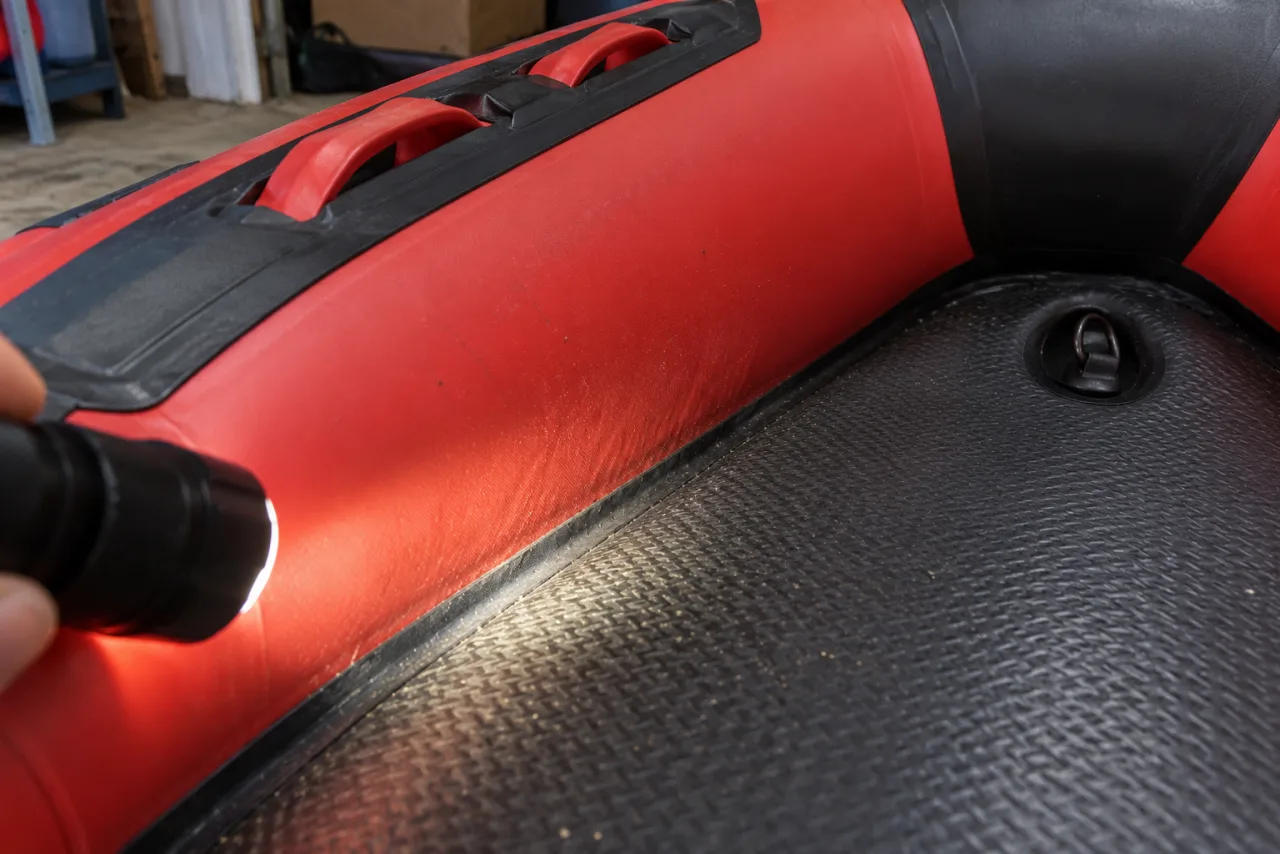
Locate the relevant joints
Request model drawings or annotated photographs showing tube joints, floor interfaces and attachment patches. Ask which areas use each joining process. Different parts of one boat may need different methods, so a single process label is incomplete.
Request meaningful records
Ask what production and inspection records will be available for your configuration and batch. Define photographs and recorded checks in the agreed inspection scope. Workshop footage can show activity but does not prove the condition of an unseen finished joint.
Inspect visible condition carefully
During a sample review, photograph joint edges, surface damage and any visible separation against the agreed acceptance criteria. Do not infer hidden bond strength by pulling or scraping a joint. Suspected structural defects require assessment by the manufacturer or a qualified repairer.
Write acceptance and escalation rules
Record which findings require clarification, repair or rejection and who approves the outcome. Ask for the applicable manual and repair boundary. A comparison between suppliers should use the same documented requirements rather than assuming one joining method always outperforms another.
Procurement checklist
- Identify seam locations and methods.
- Agree batch-specific evidence requirements.
- Escalate visible separation for qualified assessment.
Frequently asked questions
Is welded construction automatically superior?
A process name alone does not establish finished quality; material, design, process control and relevant evidence all matter.
Can photographs prove seam strength?
They can document visible condition but cannot establish hidden structural performance without appropriate testing evidence.