
What Emergency Water Filters Can and Cannot Do
A filter is only useful when its documented treatment scope matches the water problem. Clear-looking water and a reassuring product name are not evidence of safety.
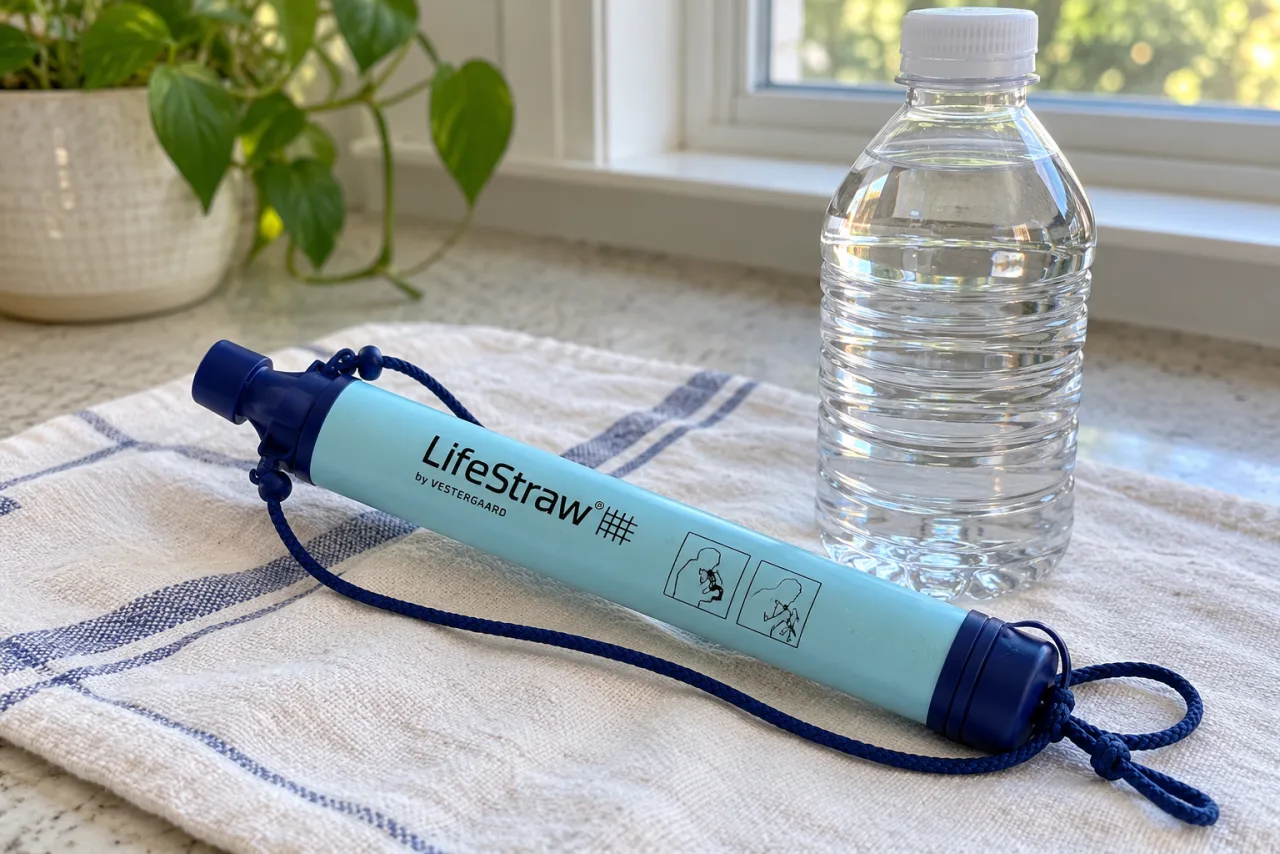
Identify the likely contamination
Ask the local water authority what advisory applies and which sources are acceptable. Microorganisms, dissolved chemicals and fuel require different responses. CDC warns that boiling or disinfecting water containing fuel or toxic chemicals does not make it safe.
Read claims at product level
Request the exact model instructions and the evidence behind each removal or reduction claim. Ask which organisms or contaminants were evaluated and under what conditions. Do not translate a sediment-filter claim into protection from viruses or chemical contamination.
Price the complete working kit
Include the correct replacement cartridges, storage components and any manufacturer-required accessories. Ask how users know replacement is due and which cleaning steps are permitted. A low purchase price can hide missing consumables or an impractical maintenance routine.
Keep a safe alternative available
Plan stored drinking water and an official resupply source alongside treatment equipment. Have a competent buyer review instructions before distribution. RaftInflatable can help coordinate sourcing enquiries, but the order must state the verified product scope and cannot promise universal floodwater purification.
Procurement checklist
- Record the water advisory and intended source.
- Collect model-specific claims and instructions.
- Order compatible consumables and retain a safe alternative.
Frequently asked questions
Can one portable filter handle every floodwater source?
No. Contaminants and treatment limitations differ; avoid sources authorities identify as unsafe.
Does a finer-looking cartridge prove better protection?
No. Evaluate documented treatment claims for the exact product rather than appearance.