
Plan Routine Cleaning for a PVC Boat
A cleaning plan should remove contamination without introducing material damage. Begin with the manufacturer care instructions for the actual PVC construction and fitted components.
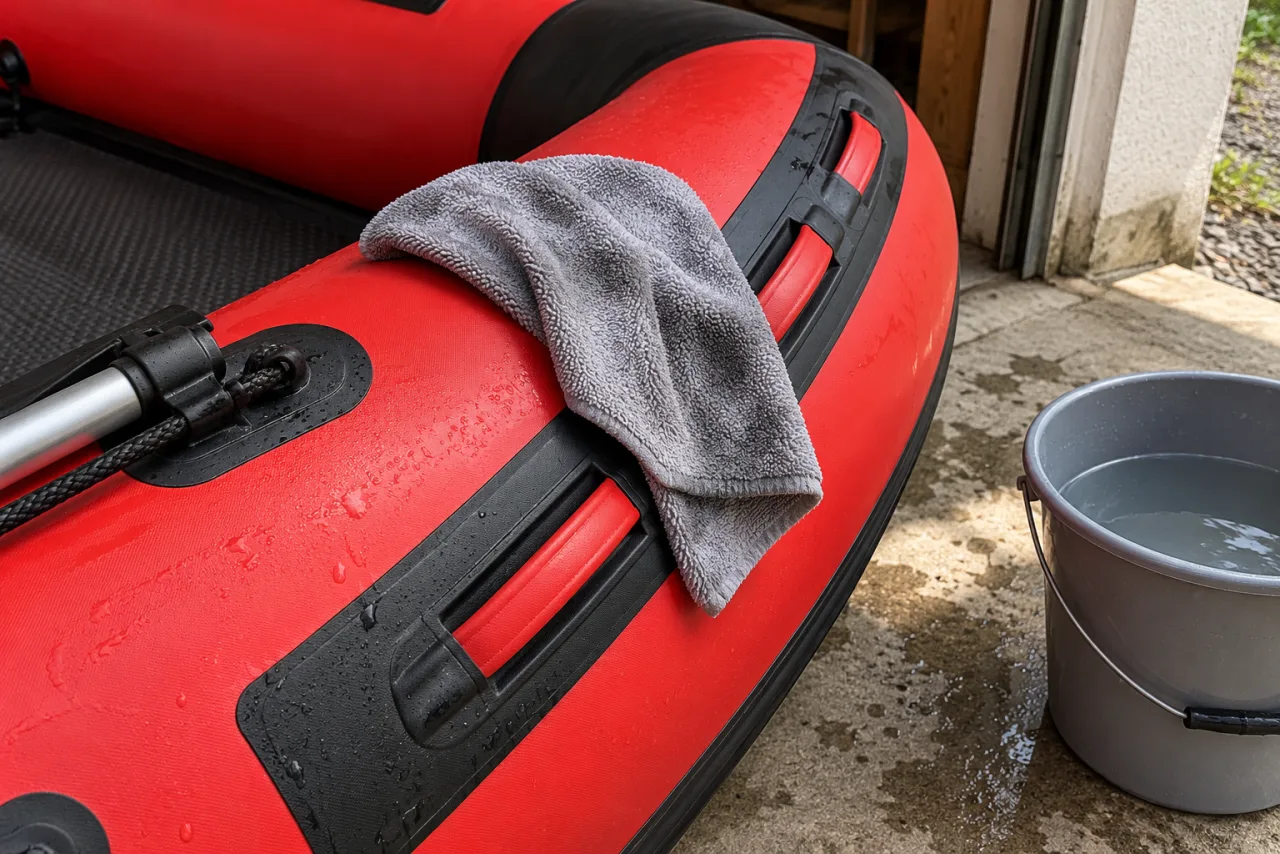
Identify approved materials
Ask which cleaners, brushes and protective products are permitted for the tubes, floor, deck pad and fittings. Different materials may have different requirements. Do not use household solvents or a product recommended for another fabric without written compatibility confirmation.
Remove debris accessibly
Plan access to the floor edges, seating interfaces and other areas where grit collects. Follow the manual for removing parts. Keep a simple cleaning inventory so staff do not substitute an abrasive tool when the approved item is unavailable.
Include rinsing and drying
Use the manufacturer recommended sequence after the intended water exposure. Allow accessible surfaces and removable parts to dry before closing bags. If moisture may have entered a chamber, request the specific drying procedure rather than dismantling a valve or applying heat.
Make cleaning repeatable
Assign a person, location and record for routine care. Note unusual stains, damaged surfaces or changes around seams separately from dirt. If contamination is unknown or difficult to remove, ask the manufacturer how to proceed before escalating to a stronger chemical.
Procurement checklist
- List approved cleaners for each material.
- Provide access to debris collection areas.
- Allow drying time before packing.
Frequently asked questions
Can any inflatable-boat cleaner be used on PVC?
Confirm compatibility with your model and every surface it will touch; the product category alone is insufficient.
Should a stubborn mark be scrubbed harder?
Stop and seek approved guidance if normal cleaning fails, particularly near seams, coatings or bonded fittings.