
Check Transom Condition Before Specifying a Motor
The transom connects propulsion loads to the boat structure. Review its condition and documented motor compatibility before selecting an outboard or accepting a used or sample hull.
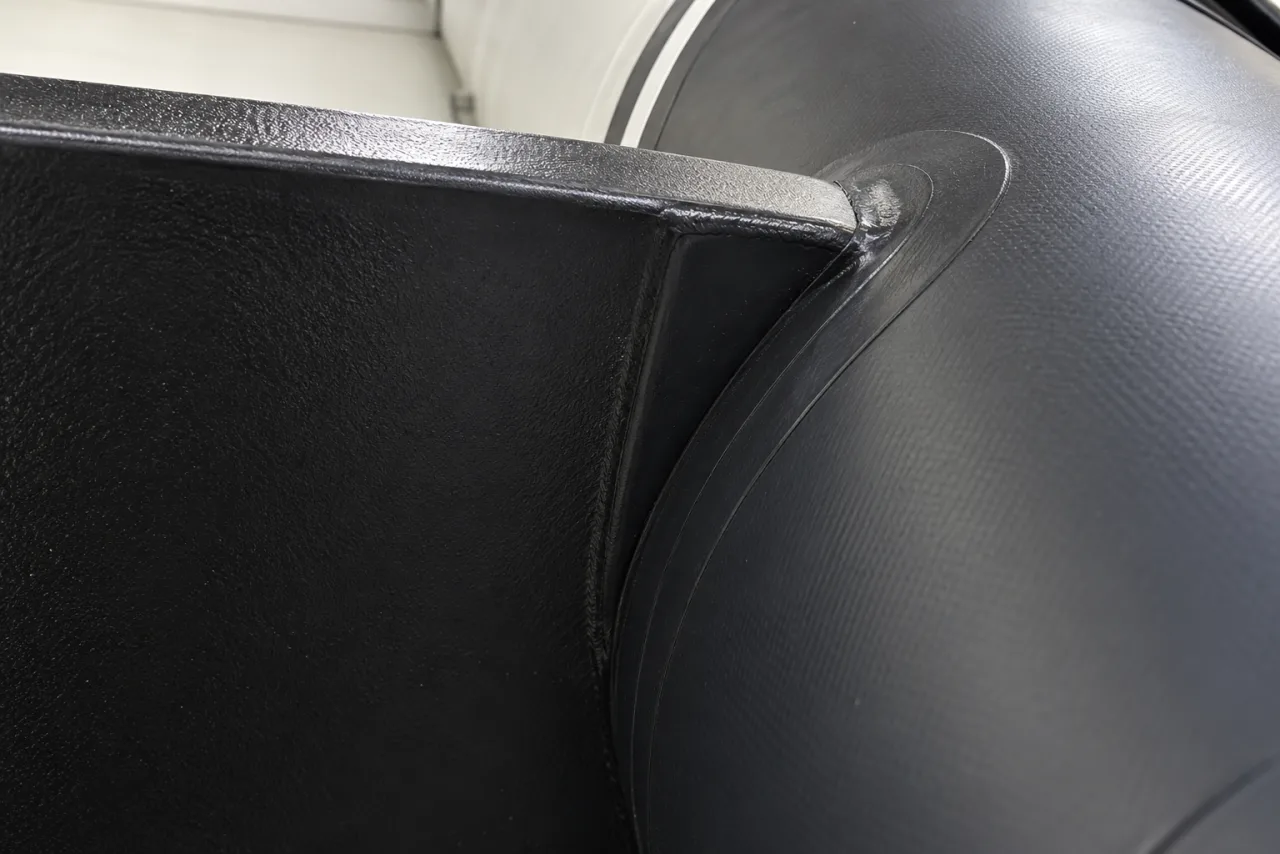
Confirm the structural configuration
Record the boat model, transom identification and any fitted motor bracket. Request the manufacturer motor limits and installation instructions for that configuration. A motor physically fitting the clamp area does not establish a suitable combination.
Inspect visible warning signs
Photograph cracks, distortion, damaged surfaces or separation around joints and attachments. Check the areas accessible without dismantling structural parts. A clean surface does not prove hidden condition, so record history and concerns as well as appearance.
Review changes and prior work
Ask whether the transom or mounts have been repaired, drilled or modified. Request records and the approval behind those changes. Do not treat added hardware or a reinforcement plate as proof of increased permitted motor power or mass.
Set a qualified decision path
Refer structural concerns to the manufacturer or a qualified marine repair provider before operation. Agree what evidence is needed for acceptance and record the outcome. Avoid proposing a DIY structural repair or conducting a motor trial to see whether a suspect joint holds.
Procurement checklist
- Match motor guidance to the exact transom.
- Photograph visible changes and attachment areas.
- Obtain qualified review for structural concerns.
Frequently asked questions
Does a motor clamp fitting prove compatibility?
No. Ratings, mounting geometry, engine mass and manufacturer instructions also require confirmation.
Can reinforcement increase the motor rating?
Do not assume it does. Any changed configuration needs explicit manufacturer approval and relevant documentation.