
Protect Documents and Small Electronics from Water
Document protection needs both suitable packaging and a way to retrieve information when the original is unavailable. Keep the plan simple enough to use in a hurry.
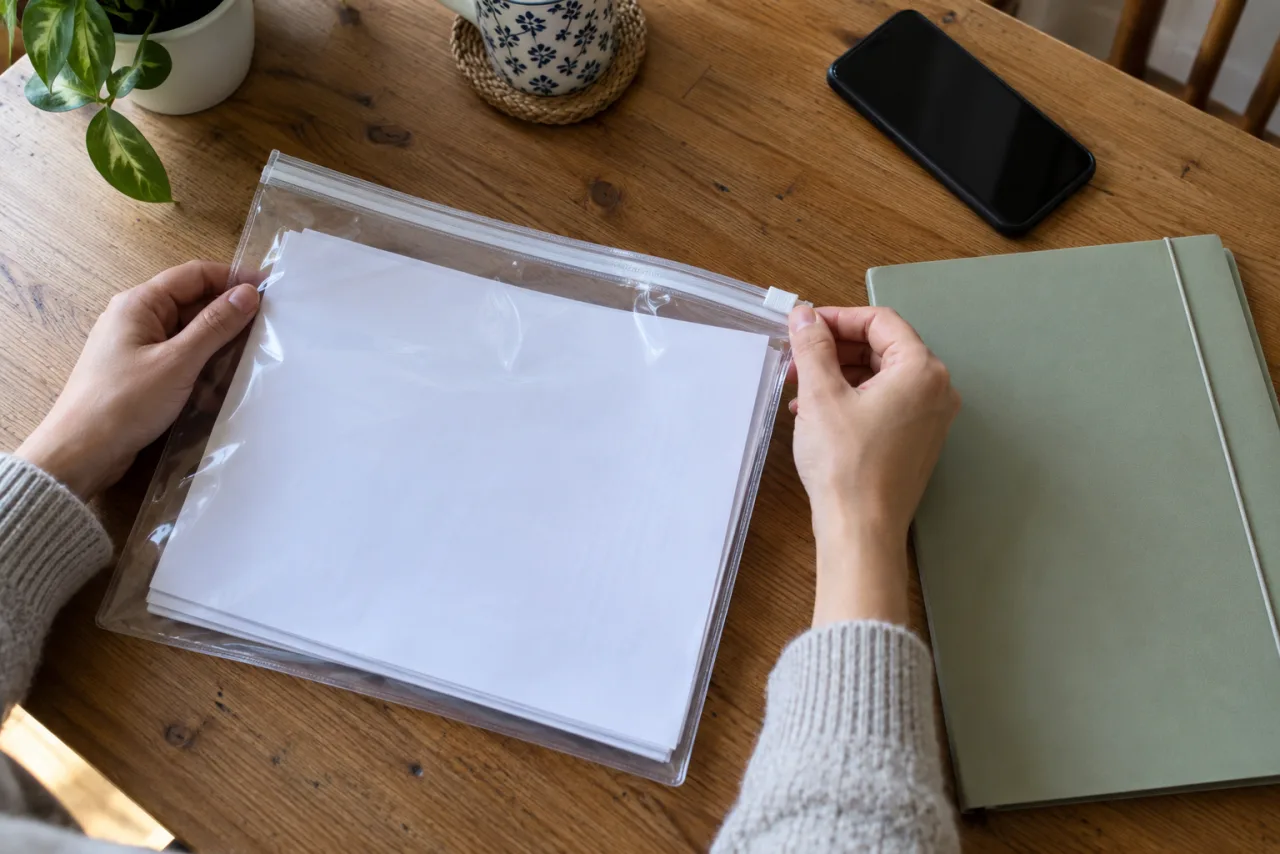
Choose the documents deliberately
List identity documents, emergency contacts, insurance details and essential household records. Keep only what is needed in the grab bag. Sensitive originals and spare keys may need separate security arrangements rather than being placed in a clearly labelled public storage box.
Check usable internal dimensions
Ask for the pouch interior size and closure instructions, not just the outer dimensions. Confirm whether folded papers, passports or a device case fit without straining the seal. A tightly packed bag can be awkward to close and inspect.
Examine the protection claim
Request the exact product description and the conditions attached to its water-resistance claim. A splash-resistant pouch is not automatically suitable for prolonged immersion. Check closure surfaces and damage before packing, following the supplier instructions without inventing a waterproof rating.
Keep accessible backup information
Ready.gov recommends protected digital copies as well as a waterproof document container. Maintain an emergency contact card that does not depend on unlocking a phone. Decide who updates the copies and how trusted family members can access essential details if separated.
Procurement checklist
- List essential documents and access responsibilities.
- Confirm usable size and closure instructions.
- Maintain protected copies and an offline contact card.
Frequently asked questions
Does a zip closure prove a bag is waterproof?
No. The closure design, product condition and stated test scope matter.
Should every backup be on one phone?
No. A damaged or inaccessible device can remove all those copies at once.